

Glossary
Varnas
The original varnashrama is the division of society into four Varnas (types) and four Ashramas (stages of life) that cooperate to satisfy the Supreme Being. One’s Varna is determined by one’s character, qualities, training, and work. The focus is spiritual advancement and spiritual satisfaction for each member of society.
There are three qualities or Gunas : Sattva (purity), Rajas (passion) and Tamas (inertia). These three qualities are found in all people, but in varying proportions. Each Varna has these qualities in different amounts. One who has pure Sattva alone is a Sage. If Sattva predominates, they are contemplative, wise thinkers who guide rulers of the country, provide spiritual stability to the society, people with a pure mind and good, gentle qualities. If Rajas predominates, they are good, brave, but passionate and activity oriented people. If Tamas predominates, they are dull and ignorant, not prone to enquiry and reasoning.
Serenity, self-restraint, austerity, purity, forgiveness, uprightness, knowledge, faith in God, Self-Realization are the duties of the Brahmanas, born of (their own) nature. Prowess, splendour, firmness, dexterity, and also not fleeing from battle, generosity and lordliness are the duties of the Kshatriyas, born of (their own) nature. Agriculture, cattle-rearing, trade and business are the duties of the Vaisyas, born of (their own) nature. And other people performing their actions, professional or household, consisting of other services to the community is the duty of the Sudras, born of (their own) nature.
Vedantic
~~~
Vedanta represents the philosophical portion
of the ancient scriptures of India, the Vedas.
Specifically, it refers to the final portion
of the Vedic literature, the Upanishads, but
it also includes the Bhagavad Gita, the great
Epics of India, as well as the Puranas,
and many other texts, hymns, and writings.The basic teaching concerns the ultimate
identity of the individual soul with the
Supreme Soul. The goal of Vedanta is for
the seeker to have the direct experience
of his or her True Nature, and it is held
that each and every one of us is qualified
to have that highest illumination, if we are
willing to put forth sincere and intense effort.Vichara
~~~
Self-Enquiry; Enquiry within into the nature of the Real I. Who Am I ?
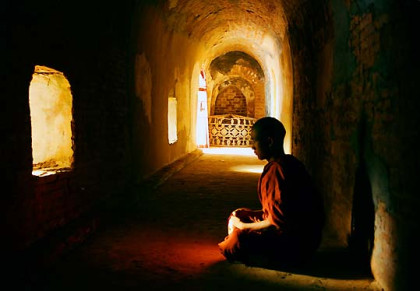
Vichara
Self-Enquiry; Enquiry within into the
nature of the Real I. Who Am I ?
Vijnanamaya
Composed of Intellect, the analyzing,
rationalizing entity.Vilaya
Disappearance (of the objective world
as a separate entity from oneself).

